
To help all SMEs achieve 20% cash flow margins through operational efficiency, team morale and customer referrals.
For general strategies and theory, read our posts.
For specific questions or assistance, email ryan@opxaero.com.
Posts
- 20% cash flow is attainable with a rigorous control of costs and a transformation of the business model.
 Any business that has been operating for over 3 years continuously and has demonstrated year over year growth in revenue already has a revenue strategy that works (for now). The goal is to adapt the business model to that working revenue strategy in such a way as to attain 20% cash flow. First, we have… Read more: 20% cash flow is attainable with a rigorous control of costs and a transformation of the business model.
 - Not all simulations work out as planned.
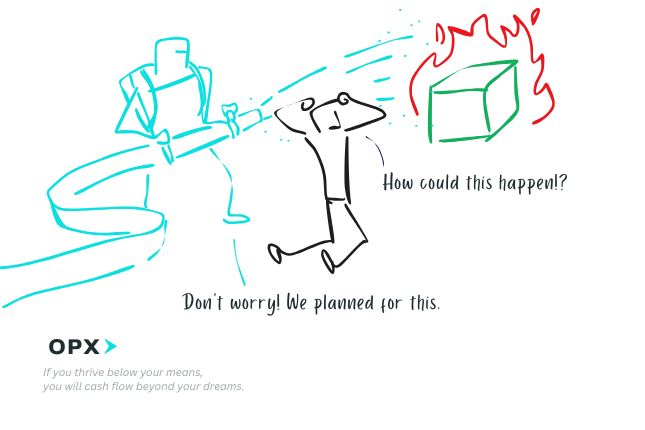 In the final year of running G&S, I ran a simulation for an ambitious project that ultimately got crushed by brute force reality. Not all simulations work out as planned. Taking the year over year growth in sales for both business units and trying to be as conservative as possible, I estimated that we would… Read more: Not all simulations work out as planned.
 - Live income statements are an incredibly powerful tool for all entrepreneurs.
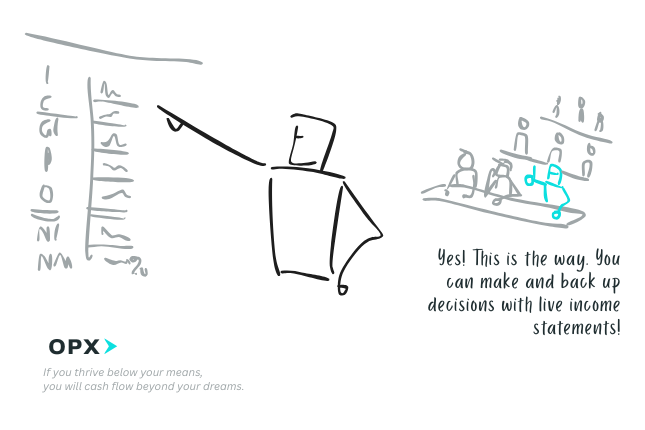 It’s simple to build. On a spreadsheet of your choice, you’ll need 4 sheets. The first sheet is for your business chequing account. The second sheet is for your business credit card. For these two sheets, column 1 will be the date, column 2 the description, column 3 the dollar value and column 4 the… Read more: Live income statements are an incredibly powerful tool for all entrepreneurs.
 - Gut instinct vs critical analysis. Which is better?
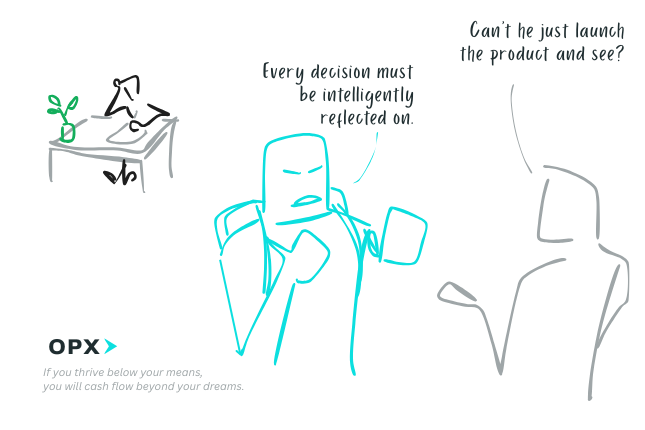 Gut instinct vs critical analysis. Which is better? Gut instinct is a future projection intuited by the subconscious brain based on past experiences. Critical Analysis are future projections intuited by the conscious brain based on cause and effect relationships. Gut instinct is effective when dealing with issues that you have experience with. If a baseball… Read more: Gut instinct vs critical analysis. Which is better?
 - One of the biggest discoveries I ever made at G&S was Scenario Analysis.
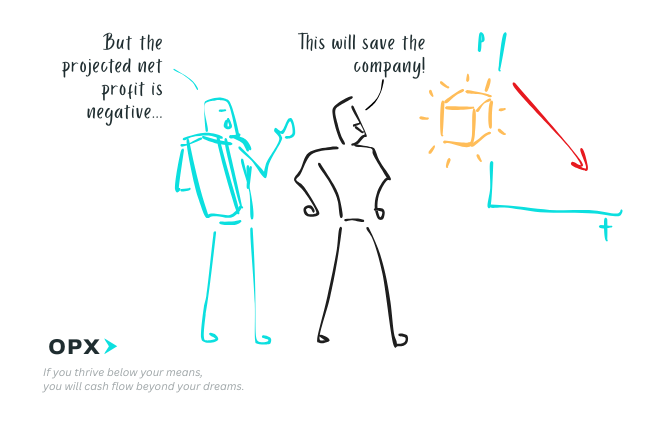 One of the biggest discoveries I ever made at G&S was Scenario Analysis. Shortly after we began regularly cash flowing and accumulating cash, I was terrified I’d repeat my past mistakes and sink the company’s finances again. So, to prevent that, I had a real-time income statement. And I’d update it every week. But I… Read more: One of the biggest discoveries I ever made at G&S was Scenario Analysis.
 - I was thinking of buying a car wash business.
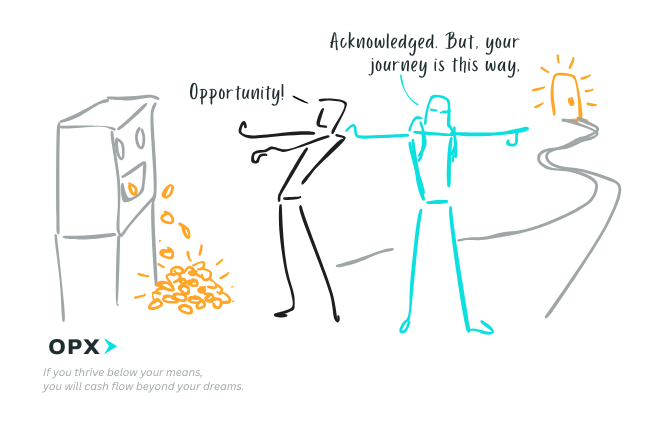 I recently enjoyed cleaning my car using a manual wash bay and I thought, “Why doesn’t everyone do this? And the margins must be awesome. In fact, why don’t I own this business?” But, all my principles flooded back to me. Am I willing to do car detailing with no overhead until I figure out… Read more: I was thinking of buying a car wash business.
 - A persistently high CP% with stagnant revenue numbers means my company is coasting and that there is a possibility that customers and employees are frustrated.
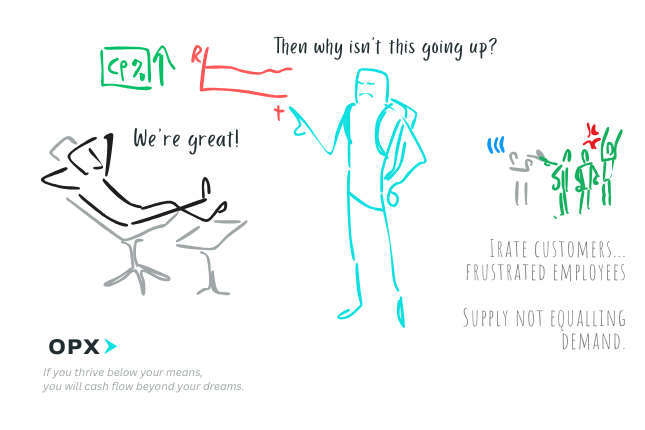 The demand for my product is high and my supply is limited, meaning there are some customers who aren’t getting what they want. And there are some employees who have to dole out rejections. Any further in this situation and the company’s cash flow situation could soon reverse as customers decide to go elsewhere and… Read more: A persistently high CP% with stagnant revenue numbers means my company is coasting and that there is a possibility that customers and employees are frustrated.
 - A persistently low CP% means that the company may not need to exist.
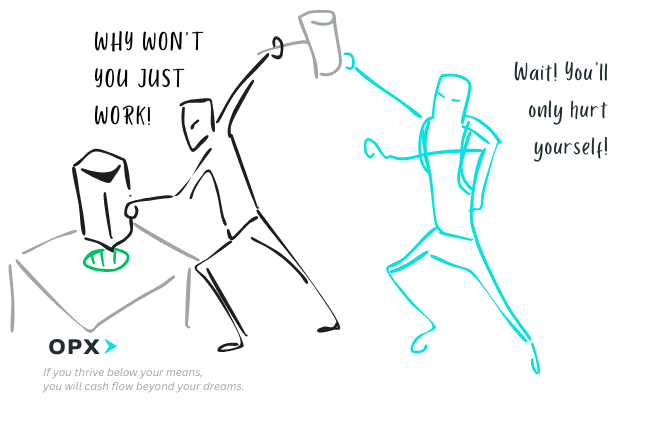 It’s resources, assets, marketing plans and sales channels are not aligning towards the sale of it’s Key Deliverable (that product you were meant to sell that also generates 20% net margins if you only sold that one product). This is a great insight. When I was running G&S, my CP% was 0. Goose egg. I… Read more: A persistently low CP% means that the company may not need to exist.
 - A company exists to serve a purpose. Cash flow issues will often derail this purpose. But, if not for the purpose, does the company even need to exist?
 When I first form a company, there is an ideal product (or service) I want my company to be known for, something we can be the greatest at. But, cash flow issues might force me to change plans until cash flow stabilizes. And if cash flow never stabilizes, that ideal product will never get realized.… Read more: A company exists to serve a purpose. Cash flow issues will often derail this purpose. But, if not for the purpose, does the company even need to exist?
 - There are many metrics to measure a business. The only one that matters is CP%.
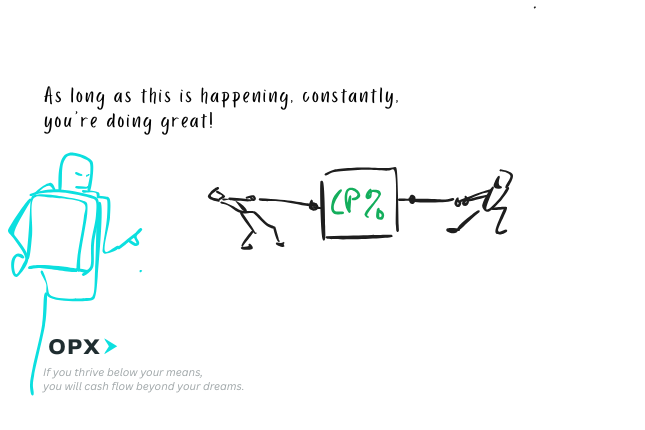 CP% (Percent of Current Potential) was a metric I discovered when running G&S that merged the concepts of the Economic Denominator (by Jim Collins) with the Theory of Constraints (by Eliyahu Goldratt). It is as simple as it is profound. Here goes. There are three categories of products (or services) every company sells: A. The… Read more: There are many metrics to measure a business. The only one that matters is CP%.